
Hollywood Bathroom Remodeling Hollywood and nearby cities
Condo Bathroom Remodeling and Your Association
A condo bathroom remodel involves your plans, your neighbors and your association. This guide walks through the questions to ask, the documents to gather and the practical details that keep a building project calm and orderly.
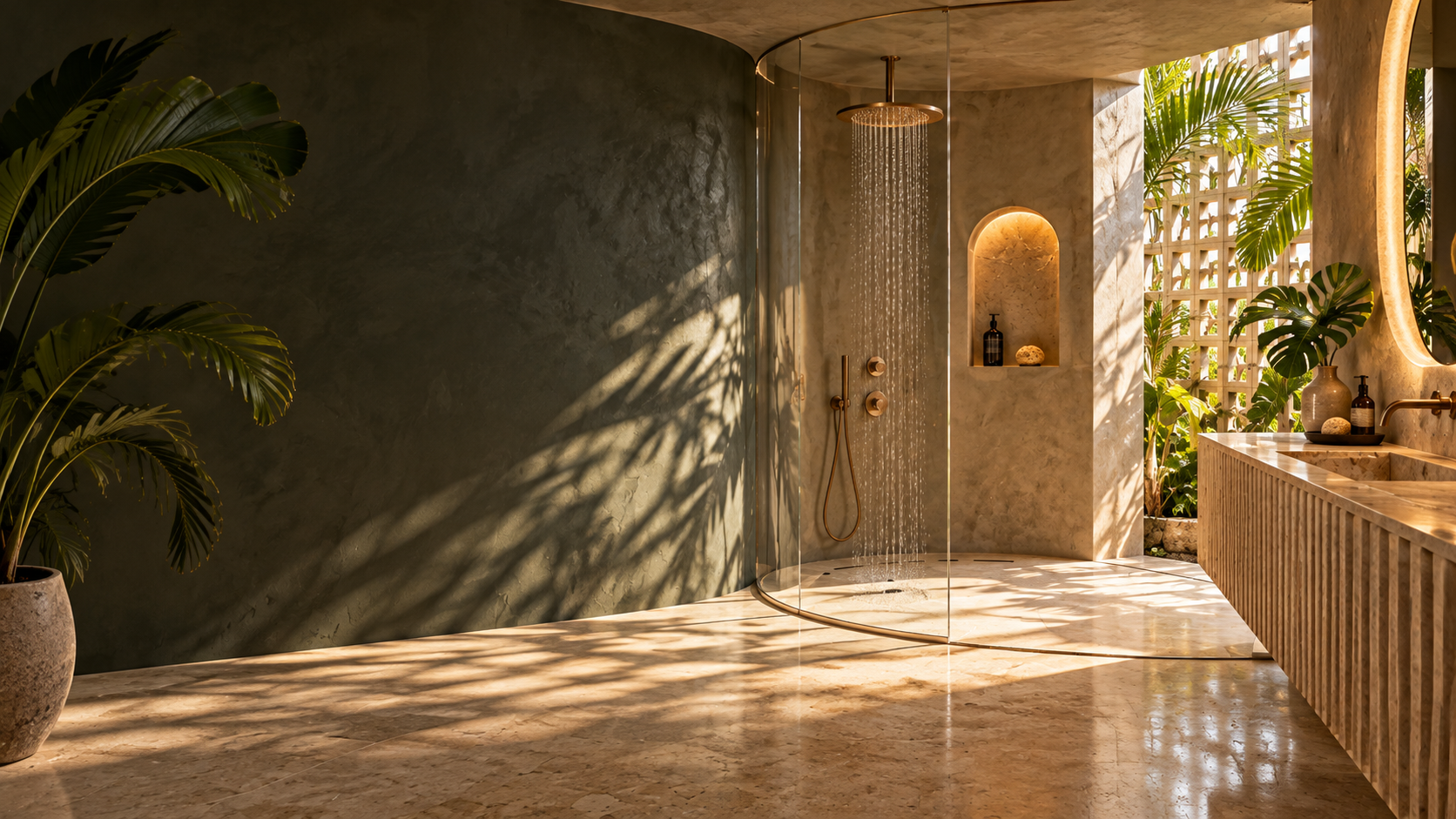
 Hollywood Bathroom Remodeling
Warm design. Clear planning.
Condo planning guide
Why a condo project starts with a conversation
When you own a house, a bathroom remodel is mostly a conversation between you and your contractor. In a condo, a third voice joins in: the association that looks after the building. That does not make the project harder to imagine, but it does change the order in which things happen. The association conversation usually comes first, before materials are ordered and long before anyone carries a box through the lobby.
Think of the association as the group responsible for the shared parts of your building and the shared experience of the people who live in it. Your bathroom sits inside a unit you own, yet it is connected to walls, floors, pipes and ceilings that other people depend on. A leak, a loud afternoon or a blocked hallway affects more than your own front door. Seeing it that way makes the rules feel less like obstacles and more like a shared courtesy.
This guide is general information, not legal advice, and it does not describe the rules of any particular building. Every association writes its own documents, and every city has its own requirements. What we can offer is a clear way to prepare, so that when you sit down with a property manager or a board, you already know what to ask and what to bring. If you want a team that plans around those answers, you can request an estimate and tell us about your building.
Start by finding your documents
Before you call anyone, look for the paperwork you received when you bought the unit. Most owners have a set of governing documents, often called a declaration, bylaws and a set of rules and regulations. Somewhere in that stack there may be language about alterations, renovations, flooring, plumbing work and contractor access. Read it slowly, and mark anything that mentions bathrooms, wet areas or work inside the unit.
If you cannot find the documents, ask the management office for a current copy. Rules change over time, so an older copy sitting in a drawer may not match what the association follows today. It is also worth asking whether there is a separate renovation application, a checklist or a form that owners are expected to use. Many buildings have one, and it can save a round of back and forth.
Keep everything you collect in one folder, paper or digital. When your contractor asks what the building requires, you can hand over the actual pages instead of describing them from memory. That small habit prevents the kind of misunderstanding where a plan is built around a rule that turned out to be different on paper.
Do not worry if the language feels dense. Legal style writing is rarely friendly, and it is normal to read a paragraph twice. Underline the sentences you are unsure about and bring them to the management office or, if you wish, to a professional who can explain them. Asking a question early is far easier than undoing a decision later.
Questions to ask the association
A good first call to the management office is short and specific. You are not asking permission in the abstract; you are asking how the building handles bathroom renovations and what it needs from you. Write your questions down before the call, and write the answers down during it, along with the name of the person who gave them and the date.
Some owners find it helpful to ask the same questions in an email afterward, simply to confirm what was said. A written answer is easier to share with your contractor and easier to find later if a question comes up. It also gives the association a chance to correct anything that was misunderstood on the phone.
Here is a starting list. Your building may have more questions, and you may find that some of these do not apply.
- Is there a renovation or alteration application, and who looks at it?
- Does the association need to approve the plans, the contractor, or both?
- Are there limits on which days and hours work may take place?
- Is there a required process for scheduling the elevator or loading area?
- Are there rules about flooring, underlayment or sound control that affect a bathroom floor?
- Does the building require documents from the contractor before work begins?
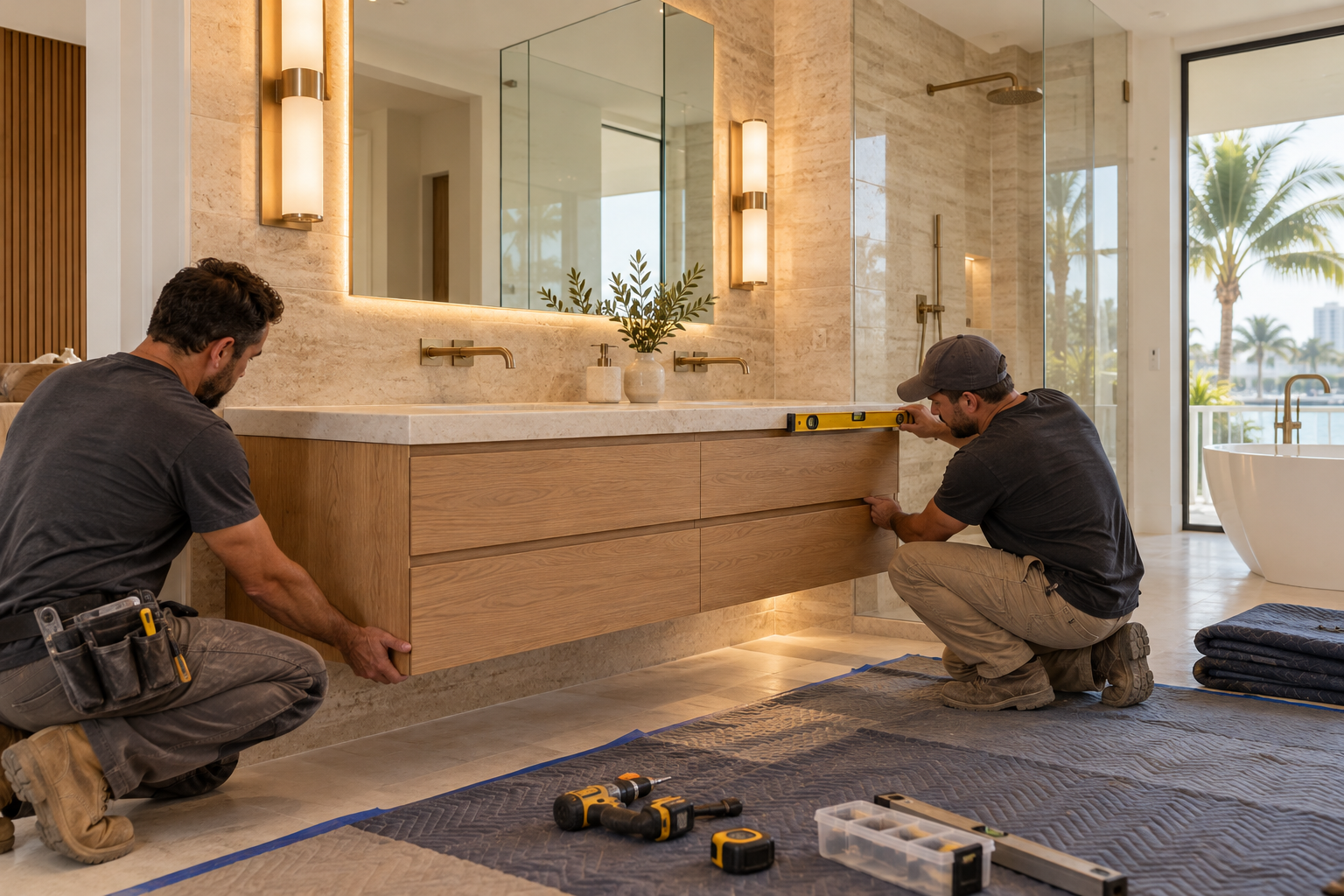
Design inspiration and careful preparation.
What your contractor may be asked to provide
Associations often want to know who is entering the building and whether those people are prepared for the job. Depending on the building, the management office may ask for documents about the contractor, a description of the work, or a plan that shows what is changing. We will not guess here at what your particular building requires. The point is to ask early, so the contractor can gather what is needed without holding up your project.
A clear scope of work helps everyone. When the plan lists what will be removed, what will be installed, and which parts of the building systems are involved, an association can answer sooner and with more confidence. Vague descriptions tend to create follow up questions. A simple, well organized summary tends to keep the conversation short.
At Hollywood Bathroom Remodeling, the planning step is built for exactly this. We talk through the bathroom, build the project direction, and coordinate the details before construction begins, so the information a building asks for is already organized. If your project is in a condo, our page on condo bathroom remodeling explains how we think about it from the start.
Scheduling, elevators and moving materials
Moving a vanity, a stack of tile boxes or a pane of glass through a condo building is a small logistics project of its own. Elevators may need to be reserved, hallways may need to be protected, and loading areas may be shared with other residents and deliveries. Ask the association how deliveries and debris removal are supposed to work, and whether there are rules about which entrances, paths or times to use.
Material handling is also where good planning pays off. Ordering everything to arrive when it is needed, instead of all at once, keeps your unit from turning into a storage room and keeps hallways clear. It also means fewer trips through shared spaces. A contractor who thinks about the building, not just the bathroom, will bring this up before you do.
Protecting common areas is a matter of habit. Floor protection, careful carrying and prompt cleanup of dust or debris in shared spaces show respect for neighbors and for the building staff. Ask your contractor how they plan to protect the route from the entrance to your door. A company with a branded team and a branded van is easy for building staff to recognize, which helps when a front desk needs to know who belongs on the job.
Noise, neighbors and the people next door
Demolition is loud, and sound travels through concrete and shared walls in ways that surprise people. Even a short stretch of noisy work can feel long to the household below or beside you. Check what hours the building allows for work, and think about who lives nearby, such as someone who works from home or a neighbor with a new baby.
A short, friendly note to the units next to, above and below you goes a long way. You do not need to explain the whole project. Something like a simple heads up about when work will begin and who to contact if there is a problem is enough. Neighbors who feel informed are far more patient than neighbors who find out when the hammering starts.
Ask your contractor how noisy tasks are grouped. Removal of old tile, for example, is usually the loudest part, while installation tends to be quieter. Knowing the shape of the project helps you tell your neighbors what to expect. It also helps you plan your own days, perhaps by working elsewhere during the noisiest stretch.
Finally, think about the quiet hours around the work. Early mornings, evenings and weekends are often the times when residents are home and resting. Agreeing on a daily rhythm with your contractor, including when the crew arrives and when they stop, lets you share a clear picture with the building and with everyone nearby, and it keeps small frustrations from growing.
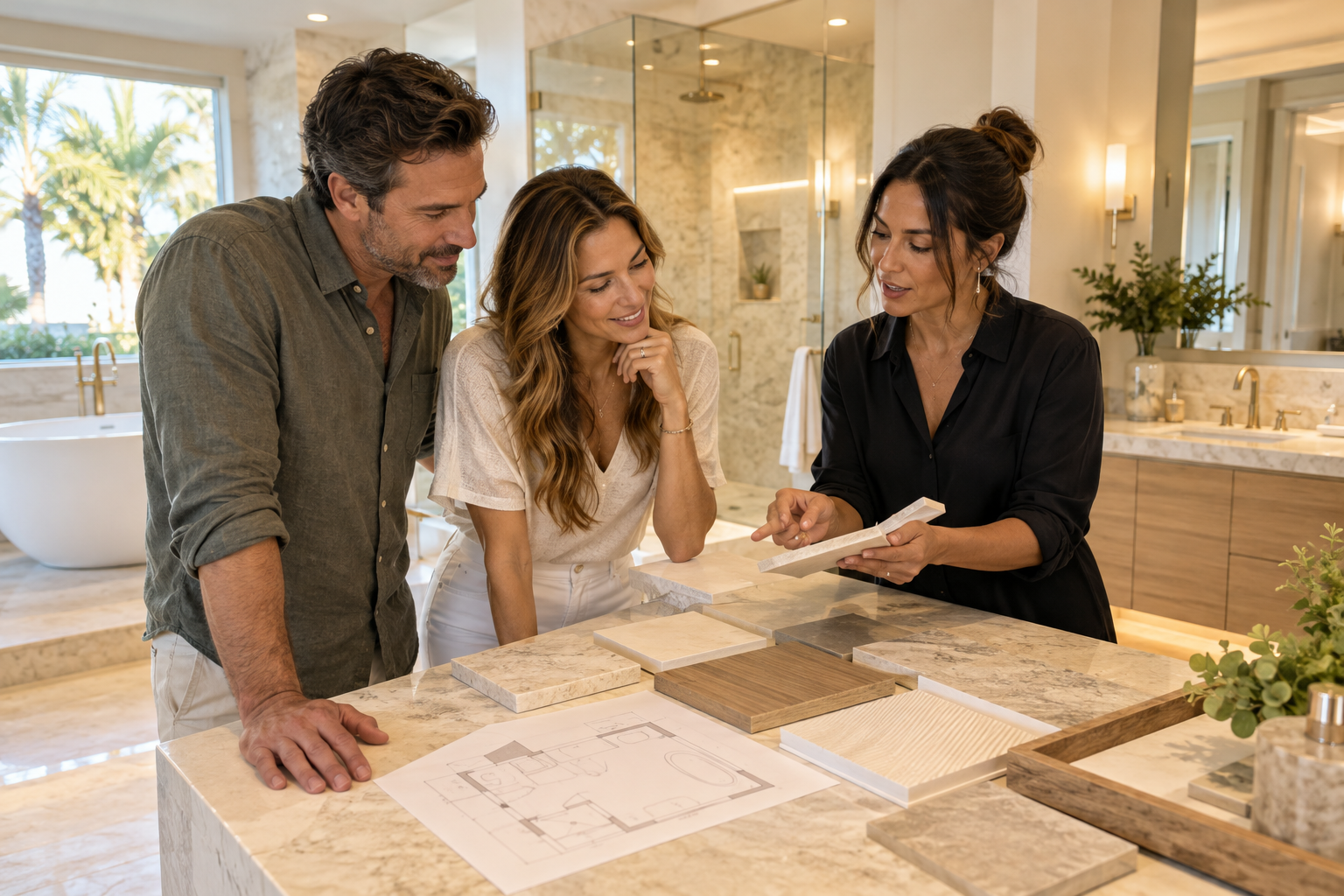
Human from the beginning
A bathroom should fit the people who use it.
We start with the everyday questions: What feels crowded? What is difficult to clean? Where do you need more storage? What would make mornings easier? Those answers help turn a collection of materials into a room that feels natural to live with.
Tell us about your bathroomWater, pipes and shutoffs in a shared building
In a condo, the plumbing that serves your bathroom may be connected to lines that serve other units. That is one reason associations pay close attention to bathroom work. A mistake in a wet area can send water through a ceiling below. Ask the building how water shutoffs are handled, who controls them, and what notice is needed before water to your unit or to a section of the building is interrupted.
Waterproofing matters more than usual in a multi level building. A shower that is built with a careful system, including proper slope to the drain and well sealed corners and transitions, reduces the chance of moisture reaching places it should not. Our page on waterproofing and our guide to shower waterproofing explained go into the details of how wet areas are protected.
It is also fair to ask the association what you should do if something goes wrong. Who do you call, and how soon does the building want to hear about a leak, and is there an after hours number for the front desk or management company? Having a plan, a contact list and a clear understanding of responsibilities makes any problem smaller if it ever appears. Prepared owners and prepared contractors rarely end up in the middle of a dispute.
Permits, city requirements and who decides
Requirements vary by city and by building, and we do not state them here as facts. Some work may need a permit from the city, some may not, and your association may have its own additional steps on top of whatever the city asks. The honest answer for any given project is to ask the city building department what applies and to ask the association what it needs.
A useful way to split it up is to think of two separate questions. First, what does the city require for the work you have in mind? Second, what does the building require before it lets that work happen? They are related, but they are answered by different offices, and one answer does not replace the other.
Bring your plan to both conversations. Being able to say what is being removed, what is being installed and whether the layout is changing makes the answers more precise. If the layout moves a toilet, a shower or a drain, mention that clearly, because it can change what each office wants to know. Your contractor should be comfortable helping you phrase these questions.
Keep a simple record of who you spoke with, which office they work for and what they told you. Dates matter. If an answer changes later, you will be glad to know when you heard the earlier version. A tidy trail of notes and emails is one of the most useful things an owner can hold during a building project, and it costs nothing but a few minutes of care.
Choosing finishes with building life in mind
Condo bathrooms often have limits that single family homes do not. Floor to ceiling heights, wall construction and shared plumbing can narrow the choices. That does not mean a condo bathroom has to feel plain. A thoughtful palette, good lighting and a well chosen vanity can make a compact space feel calm and generous.
Think about weight, delivery and installation when you choose materials. Large format tile and big glass panels look striking, but they are also heavier and trickier to move through hallways and elevators. Ask whether the building has any limits on what can be carried or stored, and plan the order of deliveries so that each item arrives when the crew is ready for it.
Lighting and ventilation deserve special attention in interior bathrooms. A good exhaust fan and layered lighting help a room without a window feel fresh and comfortable. You can read more in our guides on bathroom lighting layers and ventilation and humidity in Florida bathrooms.

Recognizable when we arrive
The Hollywood Bathroom Remodeling van and team.
Consistent branding helps homeowners know who is arriving. The same organized presentation continues inside the project, from room protection and tools to the materials and details discussed before work begins.
See our processPutting it all together before work begins
The calmest condo projects share a few habits. The owner gathers the building documents early, asks clear questions, and keeps written answers. The contractor builds a plan that covers the layout, materials, fixtures, storage, lighting and wet areas before anyone swings a hammer. Everyone knows who to call, and neighbors have been told what to expect.
Our own process follows that rhythm. We start by listening to how you use the bathroom, then we build the project direction around scope, layout, materials and priorities. Next we coordinate the details, and finally we prepare for construction by going over the plan and the information needed before work begins. That order is especially helpful in a building where other people share the walls.
If you are also thinking about how the space will work for years to come, our guide on the bathroom remodel planning checklist is a good companion to this one. When you are ready to talk about your unit, request an estimate and tell us about the building, the bathroom and what you would like to change.
Good to know
Common questions
Do I need to tell my association before I remodel a condo bathroom?
Many associations ask owners to tell them about renovation plans, and some require an application. Because every building writes its own documents, the safest step is to read your governing documents and ask the management office before work is planned. Do this before ordering any materials, so the plan fits what the building expects.
What documents should I look for first?
Start with the declaration, bylaws and the rules and regulations you received when you bought the unit. Look for language about alterations, plumbing, flooring and contractor access. If you cannot find them, ask the management office for current copies, since rules can change and older copies may not reflect what the building follows today.
Will my contractor handle the association paperwork?
A good contractor helps by organizing the plan and the information a building may ask for, but you remain the unit owner and the main contact. Ask the association what it needs, share that with your contractor early, and keep written answers so everyone works from the same page throughout the project.
How should I handle noise and my neighbors?
Check the hours the building allows for work, then give nearby neighbors a short, friendly heads up about when work begins and who to contact. Ask your contractor which tasks are loudest so you can describe them. Neighbors who feel informed tend to be much more patient when the noisy stage arrives.
Are city permits and association approval the same thing?
No. They answer different questions and come from different offices. The city building department can tell you what the work requires under city rules, while the association tells you what it needs before work happens in the building. Requirements vary by city and by building, so ask both and keep the answers.
How can I keep deliveries from creating problems in the building?
Ask how elevators, loading areas and entrances are handled, then order materials so they arrive when the crew is ready instead of all at once. Protect the route from the entrance to your door and clean up promptly. Careful timing keeps hallways clear and keeps your unit from becoming a storage room.
Your bathroom starts with a conversation